TL;DR
- SugarDaddy.com is a real platform with genuine users, but the credit model creates strong financial incentives that result in widespread fake and zombie profiles.
- The platform holds a 2.0 Trustpilot score from 130 reviews. Verify the current score before publishing.
- The dominant user complaint is paying 10 credits to open a message and receiving no reply, a pattern consistent across Trustpilot and community forums.
- SugarDaddy.com and SecretBenefits.com share word-for-word identical Terms of Service documents, including the same Cyprus governing law. Both appear to operate as the same entity.
- The ToS explicitly states that profiles may remain visible after a user stops using the service, which directly explains the zombie profile problem.
- Active members do exist and genuine connections do occasionally happen, but they require significant patience, investment, and skill at filtering.
Quick Verdict: SugarDaddy.com 2026
Best for
Experienced sugar daddies in major US or UK cities who are patient, skilled at screening profiles, and have the budget to absorb credit costs while filtering fake from genuine accounts.
Avoid if
You want predictable pricing, transparent billing, or any guarantee of genuine profiles. The credit model rewards the platform financially for keeping zombie profiles active.
Pricing
Credits: $59 for 100 / $169 for 500 / $289 for 1,000. No subscription. Credits do not expire. 10 credits to open each new conversation.
Trustpilot score
2.0 / 5 from 130 reviews (verify current score before publishing). Private Sugar Club stands at 4.5 / 5.
Biggest risk
Zombie profiles: accounts that cannot be deleted that remain visible and drain credits. The platform reserves the right to keep profiles visible after users go inactive.
Private Sugar Club alternative
Private Sugar Club offers government ID verification, zero commission for sugar babies, and a 4.5 Trustpilot rating. Worth comparing if verification standards and transparent pricing matter to you.
SugarDaddy.com has been around since 2004, which means it’s had time to build a real reputation among the sugar daddy websites. That reputation, depending on who you ask, offers very different things. For this review, I looked at a r/sugarlifestyleforum thread with 145 comments from people who have actually used the platform, 130 Trustpilot reviews, and something no other review has done: a direct comparison of the platform’s Terms of Service with those of SecretBenefits.com. What that comparison turned up is covered in its own section below. If you want the broader picture of what a sugar daddy is and how sugar dating works, that context helps before reading any platform review.
Prefer to watch a video? Check out our review video here:
What Is SugarDaddy.com?
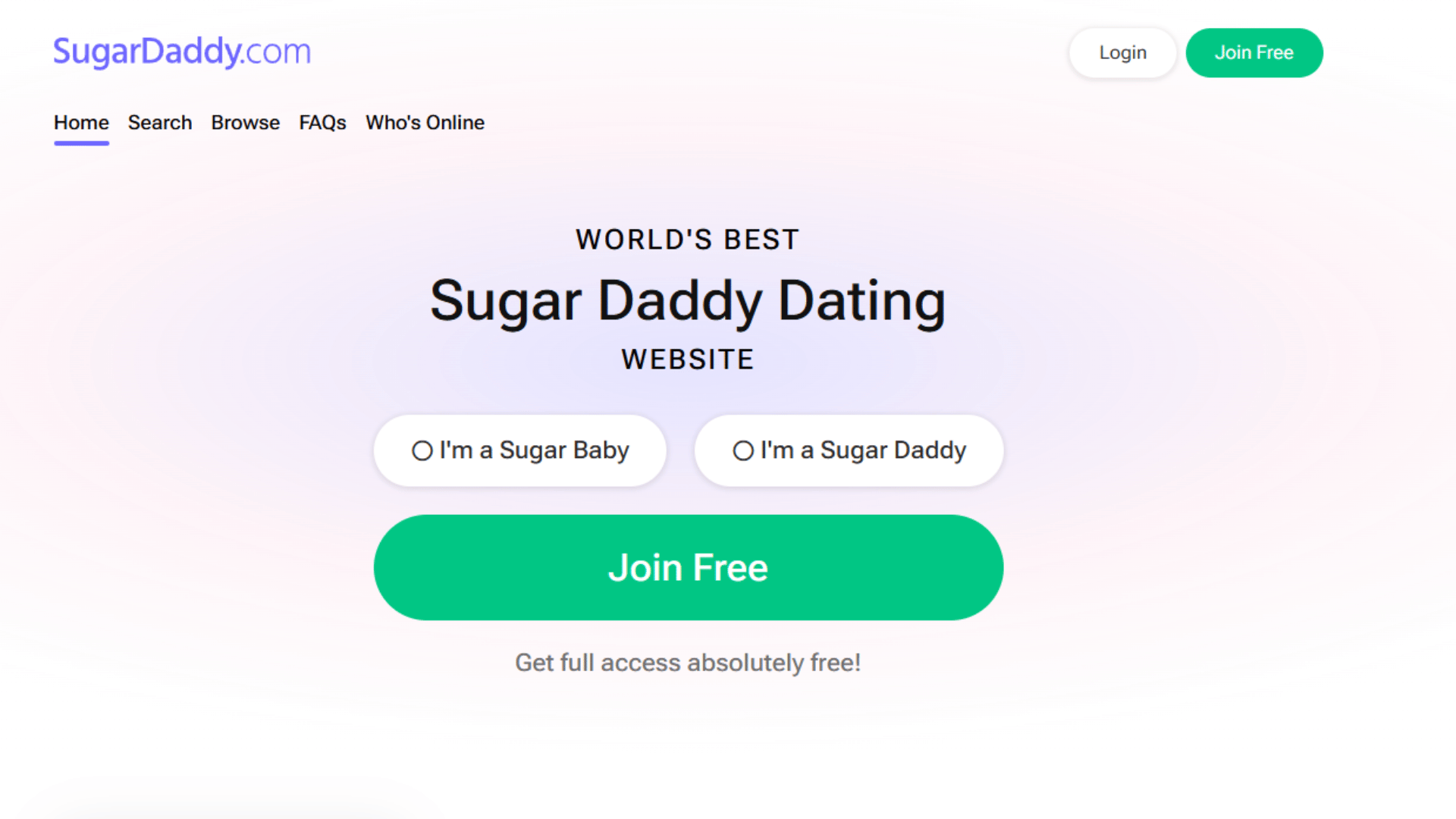
SugarDaddy.com is a credit-based sugar dating platform that has been running since 2004, originally launched in Miami. It covers the US, UK, Canada, and Australia, and instead of a monthly subscription, you buy credits and spend them to start conversations or unlock private photo albums. There is no mobile app, so you’ll use a mobile browser if you want to access it on your phone.
New members record a short verification video, and both SecretBenefits.com and SugarDaddy.com use the same verification video prompt: ‘Let me be your secret.’ This isn’t a shared template choice; it’s the same prompt, word-for-word, on two platforms that claim to be separate.
SugarDaddy.co.uk is the UK version of the same platform. It has the same credit model, pricing, and Terms of Service, and a Trustpilot score of 2.0 from 51 reviews. This matches the .com rating exactly. I’ll also talk more about the UK-specific experience later.
How We Reviewed SugarDaddy.com
Three sources went into this review. The first is a r/sugarlifestyleforum thread titled ‘Any current opinions on SugarDaddy.com?’ with 34 upvotes and 145 comments. It’s currently the second result in Google when you search sugardaddy.com reviews, which tells you something about how much weight real user experiences carry. People in that thread have been on the platform, spent real money, and reported back in detail. Some ran actual experiments. I worked through those accounts rather than relying on the platform’s own marketing.
The second source is Trustpilot, where SugarDaddy.com has a 2.0 rating from 130 reviews. The platform hasn’t invited customers to leave reviews, so the pool skews toward people with something strong to say. It also hasn’t replied to a single negative review, which is worth noting.
The third is my own legal document research: a side-by-side read of the Terms of Service for SugarDaddy.com and SecretBenefits.com. That comparison produced the most significant finding in this review, and you can verify it yourself in under a minute.
Is SugarDaddy.com Legit or a Scam?

Firstly, it is a real platform. Real people have accounts on it, real conversations happen, and some people do find genuine arrangements there. That said, ‘is it legit’ and ‘is it worth your money’ are not the same question, and the community data makes that distinction quite hard to ignore.
Here is what makes SugarDaddy.com structurally different from subscription-based platforms: on a subscription site, the platform earns money when you renew, so it has a reason to help you find genuine matches. On a credit platform, it earns money every time you open a message, whether or not a real person is on the other end. That changes the incentive entirely, and you can see it in the numbers people report.
One poster on r/sugarlifestyleforum spent over a thousand dollars on credits in a single week, reaching out to more than 200 profiles. He got four genuine responses and two actual meetings, which works out to a two percent success rate. He also created a test account with stock photos to see what would happen, and found there was no way to delete it once it existed. His conclusion was that the platform has a team maintaining ghost profiles that have been abandoned and never removed. That matches exactly what the platform’s own Terms of Service says, which is that profiles can stay visible even after someone stops using the service.
A sugar daddy who had been using platforms like Seeking and WYP for nearly a decade shared his experience on r/sugarlifestyleforum after switching to SugarDaddy.com. Using the same strategies that had always worked for him, he found that only one in ten profiles responded at all, and none of those conversations continued past the first reply. On subscription platforms, the same approach got eight responses in ten. That gap isn’t about how he was messaging, but about how the platform is set up.
The complaint that stuck with me most came from a sugar baby on r/sugarlifestyleforum who discovered that the platform had changed her bio without telling her. She had written something accurate and honest about being a graduate student looking for a platonic arrangement. The platform rewrote it with language that was provocative and sexual, nothing she had written or approved. It also sent messages from her account that she had never composed. This is the platform running a real, verified member’s account without her knowledge.
Several other r/sugarlifestyleforum users described something equally strange: they came across profiles of women they had actually met in person and gone out with multiple times on other platforms, who then messaged them on SugarDaddy.com as if they’d never met. One person noted that these women seemed to be getting compensated for sending opening messages and getting albums viewed. Taken together, these accounts suggest the platform is not just hosting inactive profiles but actively operating them.
To be fair, there are genuine positive experiences here too. One Trustpilot reviewer received a proactive refund after deactivating, without even asking for it. And the Trustpilot split, 44% five-star alongside 44% one-star, tells you that a real minority of users are having good experiences. Those connections happen, but they cost more time and money to reach than you would expect going in.
Is SugarDaddy.com Connected to Other Sugar Dating Sites?
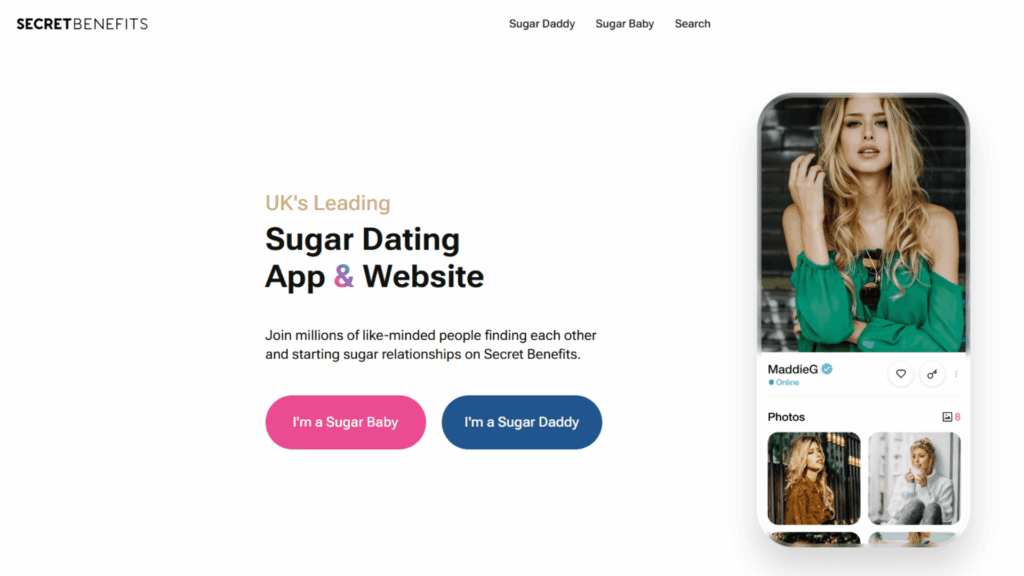
When researching this review, I compared the Terms of Service for SugarDaddy.com with those of SecretBenefits.com, another credit-based sugar dating platform. What I found is significant for anyone considering either site.
The two documents are word-for-word identical. The governing law clause in both reads ‘laws of Cyprus… courts of Cyprus.’ The prohibited use clauses are the same. The billing terms, liability limits, banned activities, and content rules match in every paragraph, and only the brand names differ across both complete documents.
The practical consequence is that the clause allowing profiles to remain visible after a user goes inactive, the one that sits behind the zombie profile complaints throughout this review, is a reserved operator right on both platforms.
Community research on r/sugarlifestyleforum adds its own evidence to this. Multiple members have reported finding their own profiles on SecretBenefits without having created an account there. One person created a trial account on SecretBenefits under a female profile and found their SugarDaddy.com male account listed there, which they had never registered for that site. Community members have also noted that the two platforms share the same look and feel, and the same profile pool. A professional dating consultancy, VIDA Select, documented the shared database in their Secret Benefits review independently.
You can check this yourself by opening sugardaddy.com/terms and secretbenefits.com/terms side by side. Remember, I’m not making any legal claims about how these companies are structured, simply presenting what the documents show and letting you draw your own conclusions.
Who Uses SugarDaddy.com?

According to DatingScout, the platform has around 240,000 members, split roughly 56% male and 44% female. The user base is mostly US-based, with a secondary presence in the UK, Canada, and Australia. Sugar babies tend to be in their early 20s to late 30s, with sugar daddies skewing a bit older.
There is no mobile app, which is worth knowing before you sign up. If you’re used to platforms that have one, you’ll be browsing on mobile through a website. It works, but it is not the same experience.
The platform doesn’t publish any data on how many of its accounts are actively in use versus sitting dormant. Based on what community members report, and the controlled experiments covered above, the ratio of active to inactive profiles is quite high. The credit model means you are paying to contact accounts whether they have a living, breathing person checking them or not.
How SugarDaddy.com Works: Credits, Profiles, and Fake Accounts
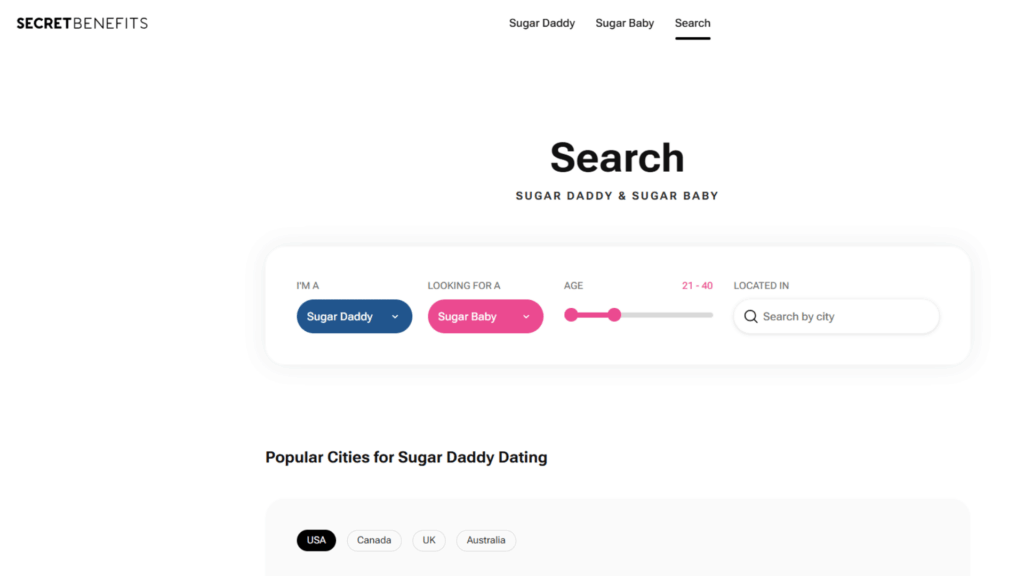
From my research, the pricing is straightforward. You buy credits in three bundles, namely 100 for $59, 500 for $169, or 1,000 for $289. Credits don’t expire, and there is no subscription or auto-renewal. Every time you open a new conversation, it costs 10 credits, which puts the cost per message somewhere between $0.29 and $0.59 depending on which package you bought.
Profiles can also have a secret album, a private set of photos you pay extra credits to unlock. Members in the community thread note that requests to unlock albums come up early and often, and a meaningful number of those unlocks lead to no response, which is consistent with profiles that are not actually being monitored by anyone.
From this, it’s worth explaining how zombie profiles work in practice. When a member stops using the platform, their account doesn’t disappear, and the Terms of Service give the platform the right to keep it visible. So, when you spend 10 credits to message that profile, the message arrives, but nobody sees it. Community members on r/sugarlifestyleforum estimate that roughly 20% of profiles are genuine and currently active. I found that SugarDaddy.com fake profiles aren’t an occasional bug in the system; they’re part of how the system runs.
People who have had some success on the platform tend to follow similar filtering strategies, like looking for profiles with recent activity timestamps, being cautious of messages that read like templates, and paying more attention to profiles that reach out to you rather than those you contact cold. Video calling before spending more credits is another approach that helps verify there is a real person on the other end, because the verification badge on a profile only means a video was submitted at registration. It says nothing about whether that account is still active.
Cancellation is handled through customer support rather than a self-service option, and one Trustpilot reviewer described the process as difficult. Even after requesting deletion, your photos may not be fully removed from the platform, consistent with the ToS clause. And as noted in the legit section above, some members have reported the platform modifying their bios and sending messages from their accounts without their consent, which goes well beyond keeping a dormant profile visible.
SugarDaddy.com Reviews: What Real Users Say
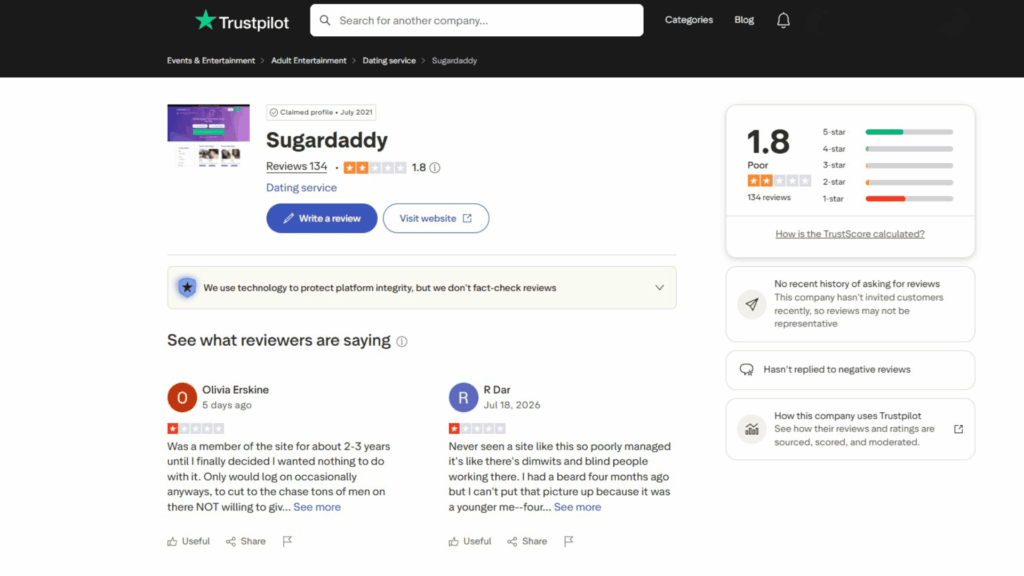
The Trustpilot split for SugarDaddy.com reviews is stark: 44% five-star, 44% one-star. That kind of variation usually means two very different groups of people are using the same platform, with very different outcomes.
A current user on r/sugarlifestyleforum gave probably the most balanced take I read. He was honest that the vast majority of accounts looked fake to him, estimating maybe 20% were real. That said, he had met three sugar babies through the site and was planning to continue with one of them. His practical advice: you will spend a few hundred dollars working through the inactive profiles before you get to the real ones. Not a glowing endorsement, but an honest one.
The most positive account in the thread came from a sugar baby who had been on the platform for six months. She had been on half a dozen meet-and-greets before she found her arrangement, and her sugar daddy now covers her rental car every month and all her bills. She believes the site is 100% legit, for her, and while it took six months and several meetings to get there, she got there eventually.
The negative pattern is consistent and specific. Most one-star Trustpilot reviews describe the same thing: paying to open a message and hearing nothing back. Multiple reviewers could not delete their accounts or photos even after requesting it. Several describe their profiles being edited or messages being sent on their behalf without permission.
SugarDaddy.com has not responded to any of its negative Trustpilot reviews. I compared that to platforms like Sugarbook, which replies to over 90% of negative reviews within a week.
SugarDaddy.co.uk: The UK Regional Version

SugarDaddy.co.uk is the same platform with a UK-facing domain. From my research, it has the same Terms of Service, same Cyprus governing law, same credit pricing, and the same verification process. The Trustpilot score is 2.0 from 51 reviews, which is identical to the .com rating. If you are looking into a sugardaddy co uk review specifically, you’re looking at the same product with the same problems.
However, UK Trustpilot reviewers raise something that US users don’t, noting the accents in the verification videos. Members from different parts of England note that the profiles they looked at all carried the same southern English accent. One reviewer from north east England pointed out that all the profiles they were checking out appeared to be from the same area, yet not one had a recognizable north east accent. They noted that a lot of the voices sounded the same. Given that the north east has one of the most distinctive accents in England, that is a hard pattern to explain without centralized video production.
The sugardaddy.co.uk review query online routes to the same Trustpilot page as the .com search, confirming they aren’t treated as separate platforms. So, you’ll experience the same issues, credit model, and ToS regardless of which domain you land on.
How SugarDaddy.com Compares to Alternatives
Here is how SugarDaddy.com sits against the platforms that come up most often as alternatives.
| SugarDaddy.com | Seeking | Private Sugar Club | SugarDaddyMeet | |
| Model | Credit-based | Subscription | ID-verified membership | Subscription |
| Pricing | $59-$289 credits | $20-$50/month | From $0/month | $20-$44/month |
| Fake profiles | Documented problem | Moderate | Minimal (ID verified) | Moderate |
| Trustpilot | 2.0 / 5 | Not listed | 4.4 / 5 | Not listed |
| Mobile app | No (web only) | Yes | Yes | Yes |
| Best for | Experienced SDs, major cities | Large member base | Verified arrangements | Smaller genuine community |
Frequently Asked Questions
Is SugarDaddy.com legit?
SugarDaddy.com is a real platform that has been operating since 2004. Real members exist and genuine arrangements do happen here. The consistent issue, reported across Trustpilot and community forums, is paying credits to open conversations with profiles that never respond. The credit model financially rewards the platform for keeping inactive accounts visible, which makes the ‘is sugardaddy.com legit’ question more complicated than a simple yes or no.
Is SugarDaddy.com a scam?
Not an outright scam, no. It is a real platform with genuine users. But the credit-per-message business model creates incentives that many members experience as deceptive, and multiple community members have documented their profiles being operated without their active participation. The platform hasn’t replied to any negative Trustpilot reviews, and its current score is 2.0 from 130 reviews.
How much does SugarDaddy.com cost?
SugarDaddy.com runs on credits rather than a subscription. 100 credits cost $59, 500 cost $169, and 1,000 cost $289. Each new conversation you open costs 10 credits. Credits do not expire and there is no auto-renewal. If you want to cancel or delete your account, you have to contact customer support directly, as there is no self-service option.
Does SugarDaddy.com have fake profiles?
SugarDaddy.com fake profiles are a well-documented issue, though real accounts do exist alongside them. The platform’s own Terms of Service state that profiles can remain visible after users go inactive, which is the mechanism behind the fake and dormant account problem. Community members who have spent significant time on the platform estimate that roughly 20% of profiles are genuine and currently active. Verification badges only confirm that a video was submitted at signup, not that the account is still in use.
Is SugarDaddy.com safe?
It’s as safe as you make it with the precautions you take. The platform doesn’t run background checks, and its ToS confirms it performs no security screening on members. Beyond the usual risks of any dating platform, there is a specific concern here because multiple users have reported the platform changing their profile bios without asking and sending messages from their accounts without their knowledge. Always video call before meeting, keep first meetings public, and do not send money to anyone you have not verified independently.
Can you delete your SugarDaddy.com account?
You can request deletion, but the platform’s Terms of Service explicitly say that profiles may remain visible even after a user stops actively using the service. Multiple Trustpilot reviewers have reported being unable to remove photos or fully close their accounts after requesting it. If you have uploaded photos to the platform, a deletion request may not get rid of them entirely.
Is SugarDaddy.co.uk the same as SugarDaddy.com?
Yes. SugarDaddy.co.uk is the UK regional version of the same platform, running on the same Terms of Service, the same Cyprus governing law, the same credit pricing, and the same verification process. The Trustpilot score for the UK site is 2.0 from 51 reviews, the same as the .com. UK users face all the same structural issues, plus the additional concern about verification video accents that UK reviewers have flagged.
What are the best alternatives to SugarDaddy.com?
It depends what you want. Seeking Arrangement is a subscription model with a much larger member base, which removes the credit-drain incentive. Private Sugar Club verifies every member’s government ID before they can contact anyone, which means every profile you can reach belongs to a real, verified person. It has a 4.5 Trustpilot rating and does not charge commission to sugar babies. Alongside this the customer reviews are outstanding. SugarDaddyMeet has a smaller pool but members tend to be more engaged. Each one suits a different priority.
Final Verdict
From all my research, it’s clear that SugarDaddy.com can work, but it works best for experienced sugar daddies in major US or UK cities who know what they are doing and have the patience and budget to filter through a high volume of inactive profiles. If you’re new to sugar dating, or if you want to know what you are paying for before you spend it, the credit model and the documented platform behaviors make this a harder starting point than the alternatives. Real connections happen here; they just cost more than they should, in both money and time.

Dr. Candice Cooper-Lovett
Dr. Candice Cooper-Lovett, PhD, LMFT-S, CST, ABS is a licensed sex therapist, AAMFT Approved Supervisor, and Board-Certified Sexologist with over 20 years of experience. Her work has been featured in Vogue, Bustle, Yahoo Lifestyle, MadameNoire, and Scary Mommy. She is the owner of A New Creation Psychotherapy Services, LLC.
Read full bio →As featured in